


What happened?
In June, Russian forces captured 556 km² of Ukrainian territory, marking the largest monthly gain of 2025. This battlefield setback coincides with mounting macroeconomic pressure: the local currency hit a record low of 49.7 hryvnia per euro on July 2, marking a 5% decline over the past month. Adding to these challenges, the US has begun "winding down" lethal aid shipments and informed allies that it will not replenish key missile stocks once the current packages are depleted, signaling Washington's gradual withdrawal from the war effort.
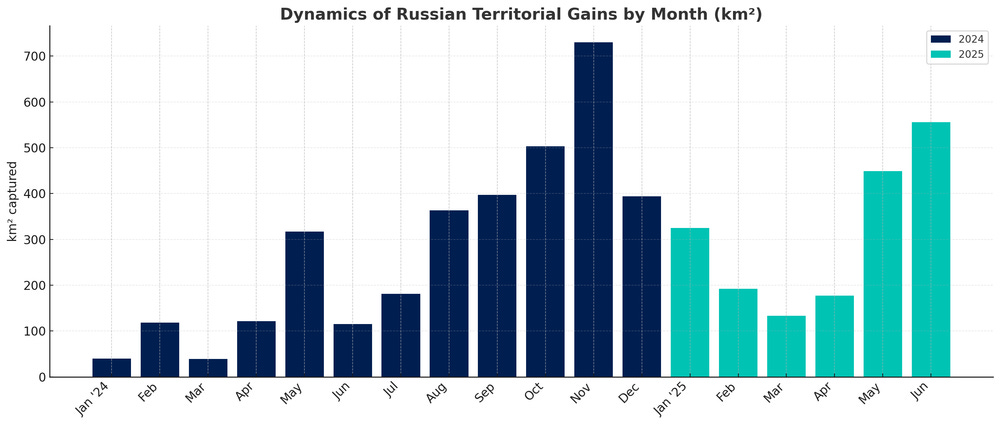
Source: DeepState
Why does this matter?
Territorial momentum: Russia's advance is squeezing Donbas supply lines and eroding Kyiv's negotiating leverage.
Macro stress: A weakening hryvnia increases import bills and debt-service costs just as foreign aid slows. This is a clear sign not only of waning financial support but also of declining confidence in Ukraine's economy.
Security gap: Reduced US resupply could leave Ukraine short of air-defense interceptors by autumn, increasing civilian and infrastructure vulnerability.
What's next?
Zelenskyy wants to decide on a cabinet reshuffle before the July 15 parliamentary recess. Promoting the current minister of economy, whom Western partners view as loyal to the president yet incompetent and untrustworthy, to the position of head of government would discourage investors and donors, who are already questioning Ukraine's wartime governance capacity.
finformant view
The convergence of territorial losses, economic weakness, and waning US military support poses a critical challenge to Ukraine. Unless Kyiv secures weapons pipelines and prioritizes competence over loyalty in the government, Russia will continue to advance.