


What happened?
Iran's Supreme Leader, Ayatollah Khamenei, warned the US against launching a military attack, saying it would cause "irreparable damage." Trump is considering joining Israel's ongoing strikes, though he has not yet ordered an attack. US military assets continue to move into the region. Meanwhile, Israel launched a new wave of airstrikes with over 50 fighter jets, targeting centrifuge production facilities and weapons factories near Tehran. Brent crude prices dipped slightly, though they remain near a four-month high amid sustained geopolitical tension.
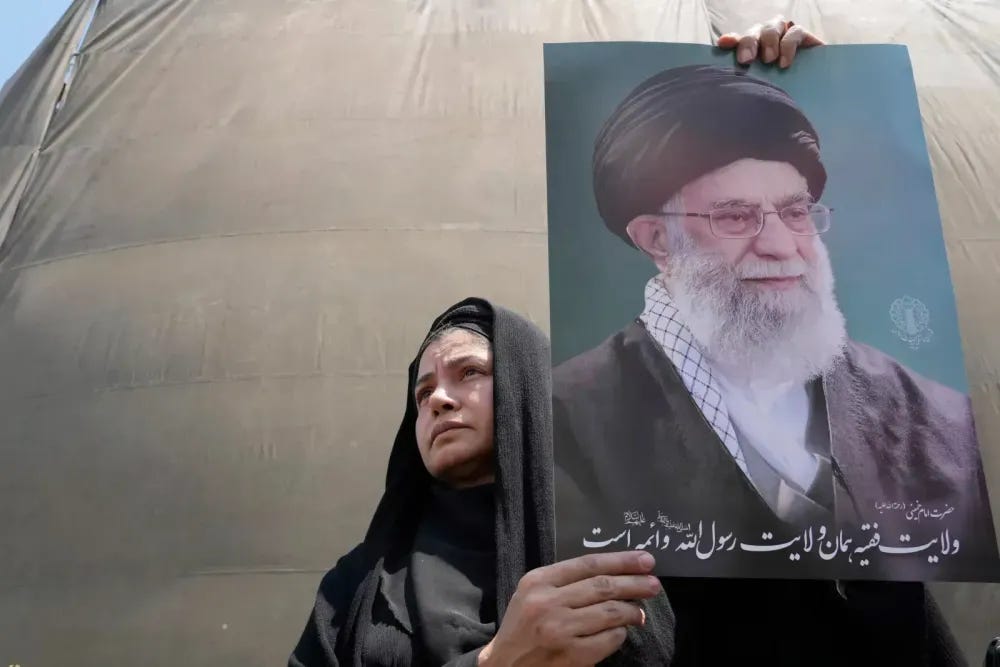
Source: Vahid Salemi / AP (An Iranian protester holding up a poster of the Supreme Leader)
Why does this matter?
US trigger point: Trump stated that he would act decisively if Israel's existence is threatened, ordering carrier groups toward the Gulf.
Proxy cascade: Seizing the distraction, Russia launched its deadliest strike on Kyiv this year, killing at least 18 people.
Markets on edge: Insurers increased Hormuz transit premiums by 40%, while global equities slid, led by airlines and emerging market debt.
What's next?
Tehran has vowed to unleash its longer-range Shahab-4 missiles on Tel Aviv "if one more Iranian leader is assassinated." Washington's red line is unclear, but a single Iranian strike on US assets could prompt American cruise missile retaliation. In the meantime, Russia will likely provide Iran with more drones and intelligence while increasing pressure in Ukraine to stretch Western resources.
finformant view
The conflict's center of gravity is shifting from nuclear deterrence to regime survival. If the US were drawn in, energy markets would face renewed upward pressure. Rather than signaling an imminent resolution, current dynamics suggest an ongoing risk of wider tensions.