


What happened?
Today, the Israeli Air Force fired two missiles at the entrance to the Syrian Defense Ministry in Damascus. This marks the third consecutive day of strikes, which have also hit the Druze city of Sweida. According to the Israel Defense Forces, the raids aim "to protect Druze civilians" from Syrian government troops due to the deep alliance between Druze citizens in Israel and Syria. This statement echoes a joint pledge by the Israeli prime minister and defense minister to "ensure the demilitarization of the region adjacent to our border." Several civilians were reportedly wounded in Damascus, and a fragile local ceasefire collapsed.
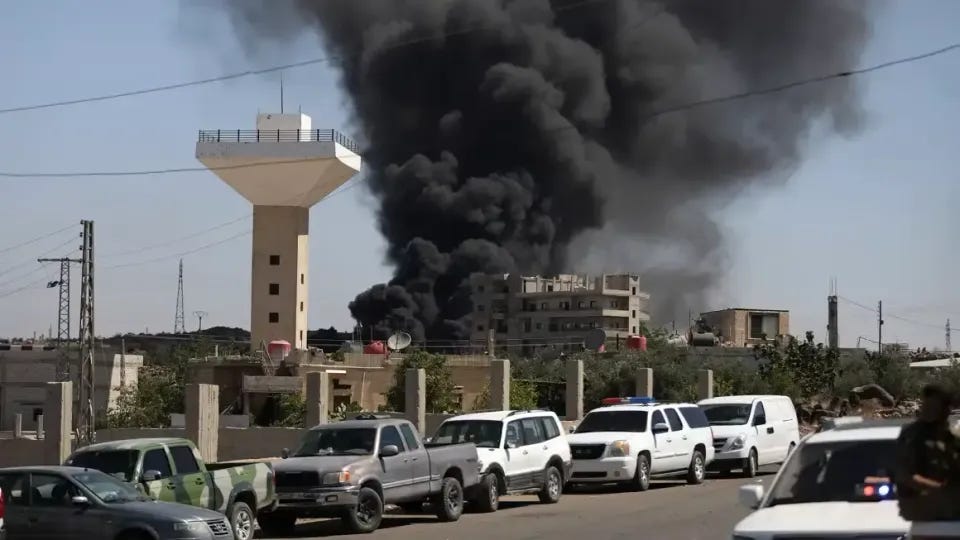
Source: Getty Images (Sweida, Syria)
Why does this matter?
Escalation risk: Targeting Syria's military headquarters signals a shift from sporadic attacks on Iranian proxies to putting direct pressure on Damascus.
Regional diplomacy: Last month, the US lifted sanctions on Syria in hopes of initiating normalization talks. However, fresh Israeli strikes complicate that roadmap. This seems to have been part of the calculus, as Netanyahu views the new Damascus government as an "extremist Islamic regime" that threatens Israel.
Market ripple: Historically, an increase in Israeli-Syrian conflict adds a $1–$2/bbl risk premium to Brent and raises Eastern Mediterranean LNG freight rates.
What's next?
Expect Israel to continue launching "warning" strikes until Syrian forces withdraw from Sweida, raising the likelihood of retaliation by Syria or Hezbollah near the Golan Heights. Washington faces a binary choice: press Jerusalem to dial back, or watch its own rapprochement efforts with Damascus stall.
finformant view
While Israel's rhetoric about protecting the Druze plays well domestically, it risks strategic overreach. Once civilian minorities become a casus belli, disengagement becomes more difficult. For now, rapprochement between the West and Syria is likely to continue.