


What happened?
Ottawa withdrew its planned 3% digital services tax (DST) on US tech companies and announced that formal trade negotiations with Washington will resume, aiming to reach an agreement by July 21. This turnaround follows President Trump's threat last week to end the negotiations and impose new tariffs, calling the tax an attack on the US. Both sides have now agreed to resume negotiations.
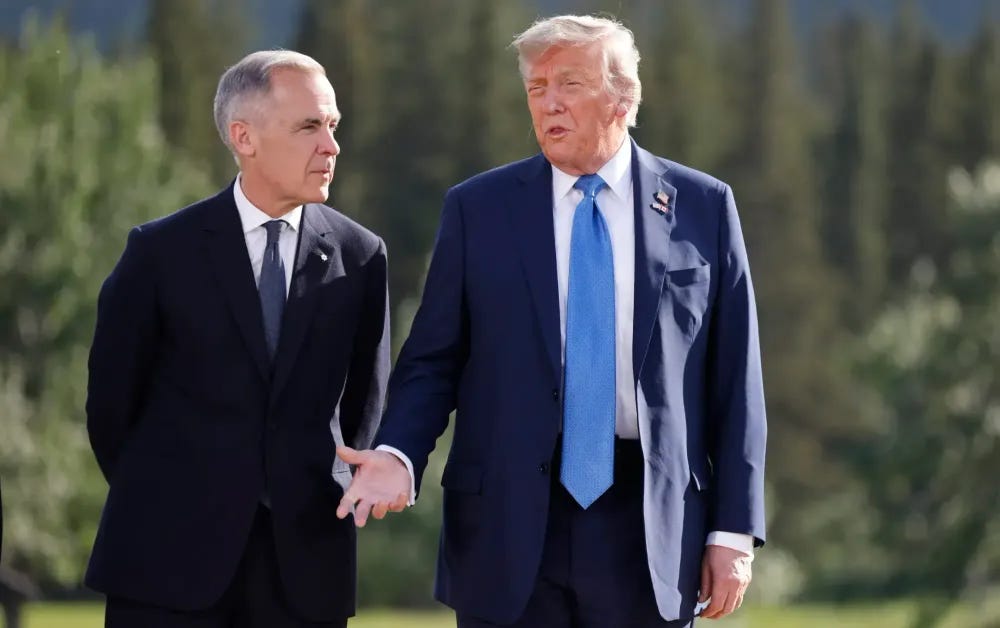
Source: Ludovic Marin/EPA-EFE
Why does this matter?
De-escalation signal: A fresh bilateral agenda removes a high-profile flashpoint just as US–EU and US–China frictions intensify.
Template for others: Canada’s retreat may pressure the EU and India, both flirting with DSTs, to reconsider, lest they invite tariff retaliation.
Senate tax bill timing: The détente occurs just hours before the US Senate votes on Trump’s sweeping tax cut and spending package, which could ease Republican resistance to trade-related revenue gaps.
What's the counterpoint?
Critics say the digital-tax retreat merely postpones conflict: Ottawa has only pledged a “pause,” not a permanent repeal. US Trade Representative aides emphasize that if a deal is not reached by July 21, the tariffs will "snap back in full." Furthermore, Canada still faces US steel and aluminum duties and could be subject to Trump's broader 25% tariff plan if negotiations break down.
finformant view
Canada's retreat shows that Trump's tariff threats remain potent. Expect a relief bid in Canadian assets, yet little spillover to global risk sentiment until investors see if this strategy is used against larger partners, such as the EU or India.