


What happened?
Munich-based Helsing, valued at €12 billion after a €600 million raise in June led by Spotify founder Daniel Ek, confirmed that it had flown a Swedish Gripen E twice over the Baltic Sea with Centaur AI in full control while a human "safety pilot" sat idle. Senior Director Stephanie Lingemann said that frontline adoption is "years rather than decades" away. In just 72 hours, the software logged the equivalent of one million flight hours, surpassing the career total of even the most experienced pilot.
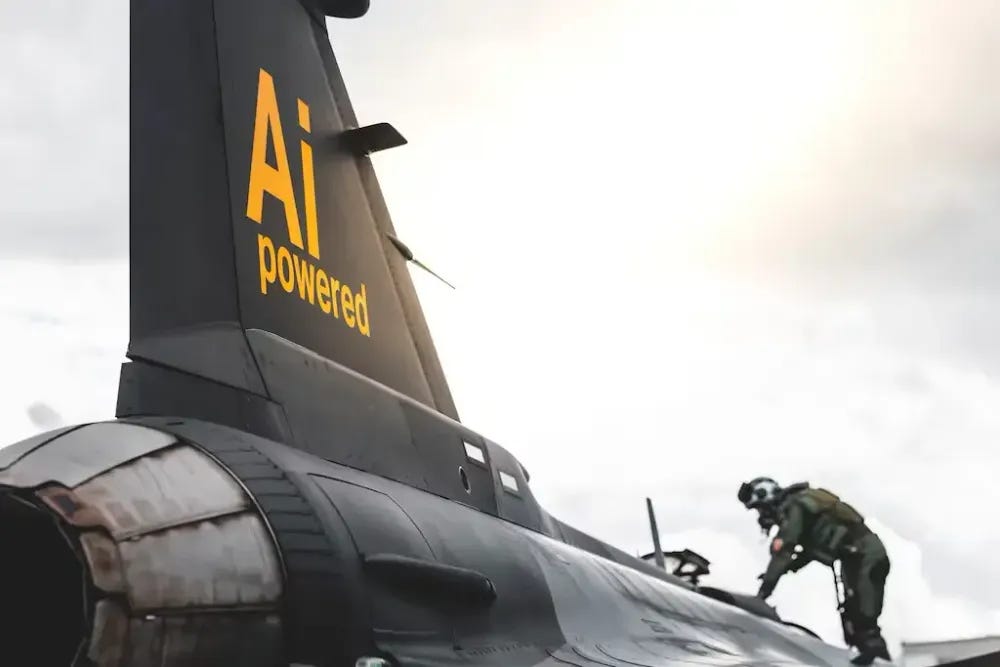
Source: Saab (Saab and Helsing teamed up for an AI-powered Gripen-E test flight)
Why does this matter?
Arms-race pivot: The US, Russia, and China are racing to deploy "loyal wingman" swarms. Europe's progress closes the gap and raises the escalation ceiling.
Economic upside: AI-powered air power is driving record venture capital investments in defense technology. Helsing's valuation makes it Europe's most valuable security startup.
Ethical flashpoints: Although Helsing insists that "humans remain in the loop," its executives concede that they may reconsider fully autonomous strikes in the event of a "full-scale war with Russia or China."
What's next?
By 2028, NATO air forces will study hybrid fleets in which manned jets will team up with AI wingmen. Meanwhile, Moscow is testing its S-70 Okhotnik drone. Each breakthrough spurs the next, eroding reaction times, shifting escalation thresholds, and complicating arms-control talks.
finformant view
Although autonomous air combat offers cheaper production costs and faster learning curves, it also poses the risk of uncontrollable escalation if the first AI jet is used in combat. For investors, defense technology remains a growth sector.